
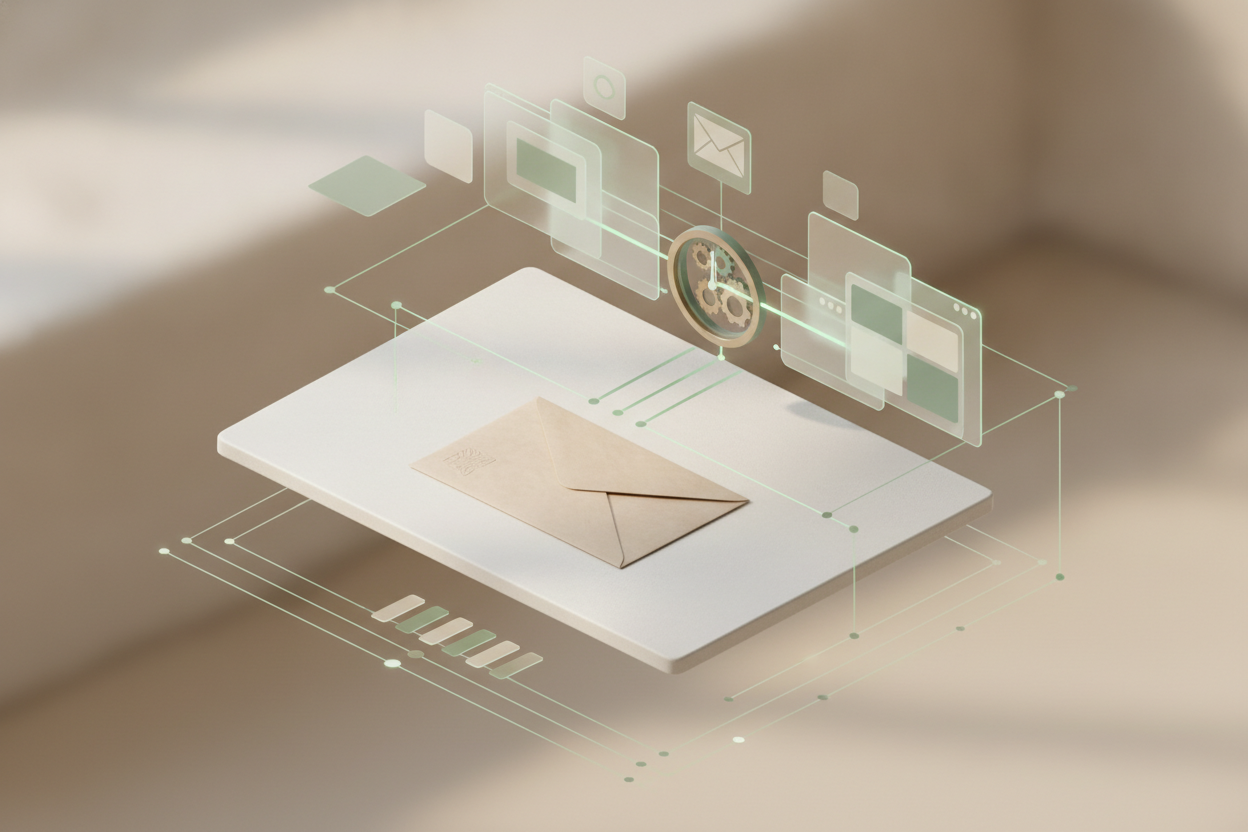
Coordinating a physical print drop alongside a digital email and ad sequence within the exact same week significantly increases conversion rates and audience recall in B2B campaign management. When prospective buyers encounter a tactile physical piece on their desk and subsequently view matching message framing across digital channels, message recognition multiplies without causing campaign fatigue. This balanced campaign orchestration creates a unified momentum that single-channel campaigns rarely achieve.
Executing successful B2B omnichannel marketing between offline and online touchpoints requires precise logistics, audience mapping, and strategic creative alignment. Rather than overwhelming prospects with repetitive messaging, simultaneous deployment across print and digital creates a memorable surround-sound effect. In complex DACH business sectors where decision cycles are extended, this strategic synchronicity builds genuine trust and shortens deal cycles by maintaining top-of-mind awareness across every relevant medium.
Timing synchronicity transforms fragmented campaigns into unified brand experiences
Delivering physical direct mail and digital nurture messages in the same week creates immediate visual reinforcement. When B2B decision-makers see a consistent offer on paper and screen within days, recall improves dramatically while trust is established through cohesive channel orchestration.
Single-channel outreach often suffers from low attention spans and high digital noise. By placing a tactile asset on an executive desk while active digital retargeting and email nurtures are live, companies anchor their messaging across multiple senses. This approach minimizes audience fatigue because the media complement each other rather than competing for attention.
When structuring integrated campaigns, optimizing costs across channels becomes essential. Many B2B teams maximize return by cutting untracked print spend and focusing exclusively on high-value physical touchpoints that connect directly to digital conversion paths. This focus ensures that physical drops carry substantial weight while digital nurtures handle repetitive follow-up tasks efficiently.
How do you align direct mail arrival dates with digital automated workflows?
You align direct mail drops with digital workflows by integrating postal tracking triggers into your marketing automation system. Triggering email and ad sequences when mail pieces enter local distribution hubs ensures that digital messages arrive during the physical delivery window.
Postal carriers offer batch-level tracking data that signals when mailers enter regional sorting facilities. Automation systems can listen for these webhook updates, pausing digital pushes until the postal drop enters its final delivery phase. This synchronization ensures prospects receive their digital introduction within 24 to 48 hours of physical delivery.
Furthermore, custom landing page URLs and dedicated QR codes placed on print and digital collateral allow your tracking stack to capture offline interactions immediately. Once a physical recipient visits a customized link, automated scoring rules can instantly adjust email sequence timing, presenting relevant follow-up details tailored to their explicit engagement level.
Unified visual language prevents audience fatigue across physical and digital channels
A consistent visual hierarchy across print and digital assets builds immediate brand recognition without causing message saturation. Using identical color palettes, typography, and clear core value propositions allows buyers to quickly process information across multiple physical and online environments.
Message fatigue occurs when prospects are exposed to repetitive, low-value communications across isolated channels. However, when omnichannel marketing uses distinct channel strengths, the interaction feels intentional. Print offers tangible depth and authority, while digital channels provide immediate interactivity and direct action paths.
To make physical materials stand out without overextending budget allocations, selective embellishments work best. Marketing managers often find that applying selective print finishing like spot UV elevates brand perception while keeping overall production budgets completely manageable. Combining refined tactile details with clean digital UI design creates an impression of high professional quality across every customer touchpoint.
What database controls stop subscribers from receiving colliding campaign tracks?
Database controls prevent audience collision by establishing mutually exclusive segmentation lists and suppressions across your CRM. Suppressing active print recipients from concurrent, unaligned campaigns ensures prospects receive a single, unified story without confusing crossover.
Overlapping campaigns confuse potential buyers and degrade tracking quality. When launching a combined print and digital initiative, clear segment boundaries must be defined in your marketing platform to exclude active recipients from secondary automated nurture streams during the campaign window.
Managing multi-track outreach without cross-channel audience collision requires systematic planning. In practice, establishing mutually exclusive segments and documented hypotheses protects data integrity while ensuring each target group receives the exact cadence intended. These strict isolation rules keep campaign attribution clean and shield contacts from receiving conflicting offers simultaneously.
Measuring combined print and digital lift requires single attribution windows
Evaluating the impact of synchronized print and digital campaigns requires setting unified attribution windows of 14 to 30 days. Tracking multi-channel lift during this set timeframe highlights how physical mail accelerates digital conversions compared to digital-only control groups.
Traditional attribution models often struggle to quantify the full influence of direct mail because response paths are frequently completed online. By establishing clear holdout groups that receive only digital outreach alongside test groups receiving both print and digital drops, campaign managers can accurately measure incremental revenue lift.
Key performance metrics should evaluate initial landing page visits, form completion velocity, and pipeline progression speed. When physical and digital touches occur within the same week, response time typically shortens significantly, proving that cross-channel reinforcement drives faster decision-making among complex buyer committees.
Why does same-week timing outperform staggered cross-channel marketing pushes?
Same-week timing outperforms staggered pushes because human memory retention declines rapidly without immediate cross-channel reinforcement. Presenting consistent messaging across physical and digital channels within a 5-day window strengthens cognitive association and trust before initial interest fades.
Staggering touches over several weeks often causes prospects to evaluate each message in isolation, losing the thematic connection intended by campaign managers. When physical mail and digital touches land in close proximity, the physical asset acts as a continuous desktop anchor while digital ads and emails provide easy response mechanisms.
This proximity effect is especially impactful in B2B environments where multiple decision-makers review purchases. A physical piece sitting in an office sparks collaborative discussions, while simultaneous digital ads ensure individual team members encounter consistent context during their daily online workflows.
Operational workflows ensuring printing production aligns with marketing automation
Aligning print production with automated digital workflows requires establishing rigid SLA schedules between print partners and marketing operations teams. Documenting production turnarounds, mail delivery estimates, and automation triggers guarantees seamless multi-channel execution.
Successful orchestration begins weeks before mailers reach the printing press. Marketing teams must standardize data handoffs, ensuring contact lists are scrubbed and verified prior to export. Establishing automated webhooks between print fulfilment providers and marketing software eliminates manual data entry and minimizes delay risks.
By establishing clear operational frameworks, marketing leaders build reliable execution engines that scale consistently across quarterly campaigns. If you would like to explore how synchronized multi-channel strategies can enhance your team’s campaign performance, we welcome an open conversation about your goals.
FAQ for this article
-
How do you synchronize physical direct mail with digital email workflows?
-
Why does same-week print and digital execution prevent audience fatigue?
-
How do you measure multi-channel lift across print and digital campaigns?
-
What controls prevent audience collision during complex B2B campaigns?
-
How can B2B print design be optimized for digital follow-up?