
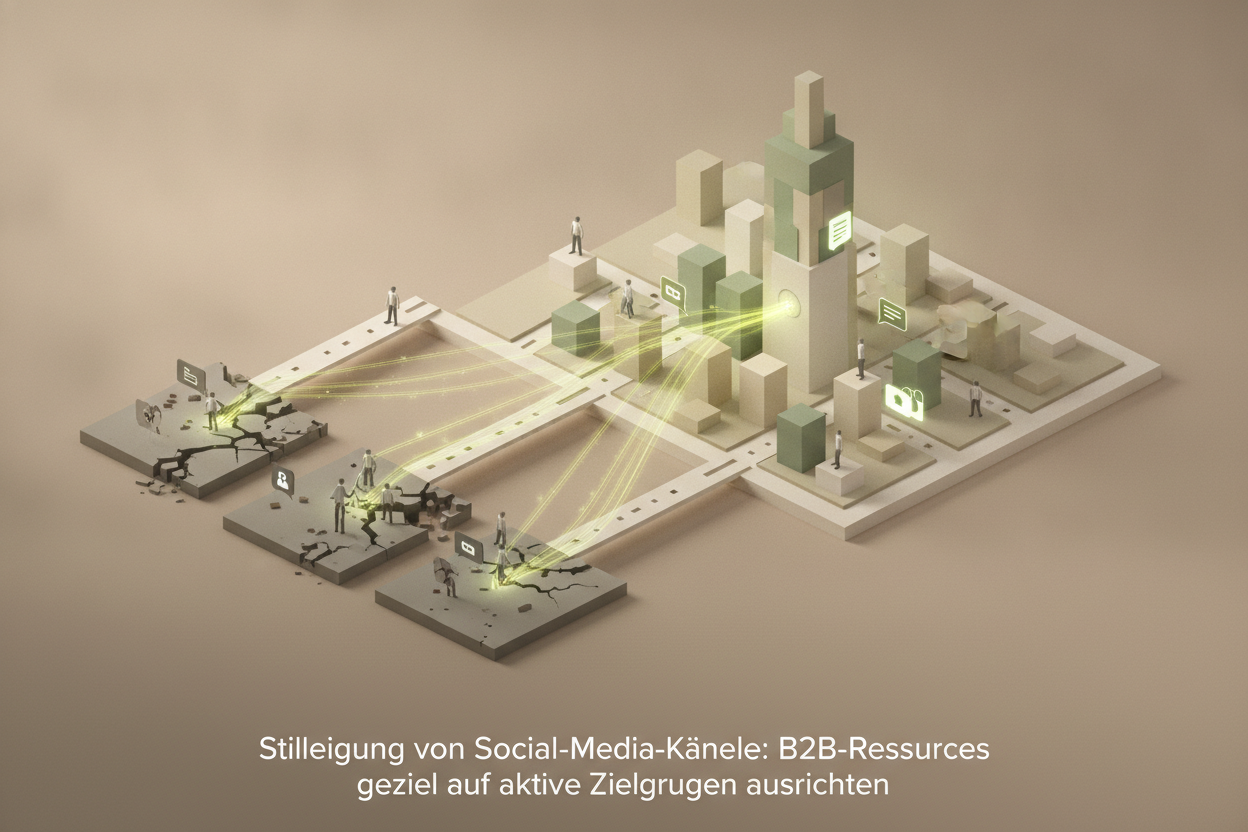
Sunsetting an inactive social channel allows B2B marketing teams to reallocate valuable resources to platforms where active conversations, replies, and direct messages still take place. Maintaining quiet accounts creates subtle brand decay, drains creative energy, and distracts teams from building genuine engagement on primary channels. A disciplined approach to platform choice ensures every hour spent producing content yields measurable business trust and qualified audience dialogue.
Many B2B organizations fall into the trap of maintaining historical social media accounts out of habit or fear of missing out. As platform algorithms evolve and buyer habits shift, maintaining an empty presence on networks where prospective clients no longer comment or interact becomes a costly exercise in routine content distribution.
Refocusing your social media strategy is not an admission of failure; it is a mature operational decision. By evaluating performance metrics objectively and closing legacy accounts with care, modern marketing leaders protect their brand authority and build deeper connections where their prospective buyers actively engage today.
Why maintaining inactive social accounts damages modern B2B brand credibility
Maintaining quiet channels signals a lack of strategic discipline and distracts your team from genuine audience engagement. Leaving inactive profile shells open without ongoing monitoring frustrates buyers who send unanswered direct messages or comments, directly undermining professional trust.
When a prospective buyer visits a corporate social media page and finds posts from six months ago with zero responses in the comment section, they form an immediate judgment about operational responsiveness. In the B2B sector, where deal cycles depend on trust and clear communication, a neglected profile suggests a company that lacks attention to detail or modern market relevance.
Deciding where to focus requires strategic clarity rather than spreading efforts thin across every legacy network. For instance, evaluating talent-led vs brand-led social strategy demonstrates that picking a single primary narrative owner per stage prevents algorithm confusion and builds faster buyer trust than operating five quiet corporate profiles simultaneously.
How do you know when it is time to sunset a platform?
A channel should be sunset when engagement metrics drop consistently, organic reach decays below actionable thresholds, and incoming direct messages or comments cease. If your team spends hours formatting content that yields zero peer interactions, your platform choice no longer aligns with buyer behavior.
Evaluating platform health requires separating superficial vanity metrics like total follower counts from active dialogue indicators like replies, direct message inquiries, and thoughtful shares. If your outbound content volume remains high while inbound conversation remains nonexistent over two or three consecutive quarters, the audience on that network has effectively migrated elsewhere.
Identifying audience migration requires calm observation rather than frantic copying. By implementing structured quarterly positioning reviews instead of competitor monitoring without anxiety scrolling, B2B teams can objectively identify genuine channel shifts, protect creative energy, and sunset declining channels with complete confidence.
Strategic steps for closing or archiving an underperforming social channel
Sunsetting a channel requires a clear migration strategy: audit historical content, update profile bios with redirection links, publish a final departure post, and pin clear contact details. This clean transition directs residual visitors toward active digital spaces without leaving prospective buyers stranded.
The first technical step involves auditing existing creative assets to extract timeless insights that can be repurposed across surviving active channels. Once historical value is preserved, draft a final, highly visual departure post that clearly informs your community where your team now publishes research, industry updates, and direct conversation opportunities.
After publishing the final update, pin it to the top of the profile grid and rewrite the account biography to include a direct hyperlink to your main social hub or website contact portal. Turn off or automate direct message autorepliers on the legacy profile to ensure incoming inquiries receive immediate guidance toward active communication channels.
Where should B2B marketing teams reallocate saved social media resources?
Saved resources should immediately shift to primary channels where audience replies, shares, and direct messages thrive. Concentrating budget and effort on active platforms allows B2B teams to deepen buyer relationships, refine high-performing content formats, and establish reliable conversation pipelines.
When a team reclaims ten or fifteen hours per month previously spent reformatting graphics for silent legacy accounts, that time can be directed toward higher-value activities. Community management on your primary platform can expand from reactive comment checking to proactive outreach, thought leadership commentary, and direct relationship building with key accounts.
Rather than scattering resources thin across dying networks, focus on high-impact media experiments. For example, testing a structured short-form video series pilot on your surviving primary channel helps establish engagement baselines while keeping production overhead remarkably low.
Protecting visual quality and content execution during channel migration
Repurposing leftover content for remaining active channels demands strict adherence to platform specifications. Simply reposting unedited visual assets across surviving channels degrades user experience, drops video completion rates, and weakens brand authority among prospective B2B clients.
Each surviving platform maintains specific user expectations for visual layout, tone, and formatting. Simply copying visual assets designed for desktop feeds into mobile vertical video streams creates clumsy visual clutter that hurts post reach and alienates sophisticated corporate buyers.
By standardizing asset preparation for your surviving channels, you ensure that every published post looks intentional, highly polished, and tailored to native platform habits. High visual standards reinforce the credibility of your sunsetting strategy by demonstrating that remaining touchpoints operate at full quality.
What are the long-term ROI benefits of focusing on fewer social channels?
Concentrating on fewer channels significantly improves resource allocation, lowers content production overhead, and elevates audience trust. Higher engagement rates on fewer platforms signal strong relevance to network algorithms, compounding visibility and accelerating qualified B2B sales leads.
When resources are concentrated, every piece of content receives proper distribution, active community moderation, and thoughtful follow-up. Algorithms reward accounts that generate consistent comment threads and direct message interactions, boosting your reach to lookalike decision-makers without additional ad spend.
Ultimately, a focused social media footprint translates into measurable operational efficiency and stronger commercial outcomes. By directing creative energy solely where replies and DMs happen, B2B marketing teams turn social media from a diluted distribution task into an active engine for trust and growth. If you are evaluating your channel mix and want to streamline your social presence, let us have a conversation.
FAQ for this article
-
When should a business sunset an underperforming social media channel?
-
How do you sunset a social media account without losing brand reputation?
-
What are the risks of maintaining an inactive B2B social media page?
-
How does resource allocation improve when a brand closes legacy channels?
-
Is it better to delete an old social media account or leave it archived?