
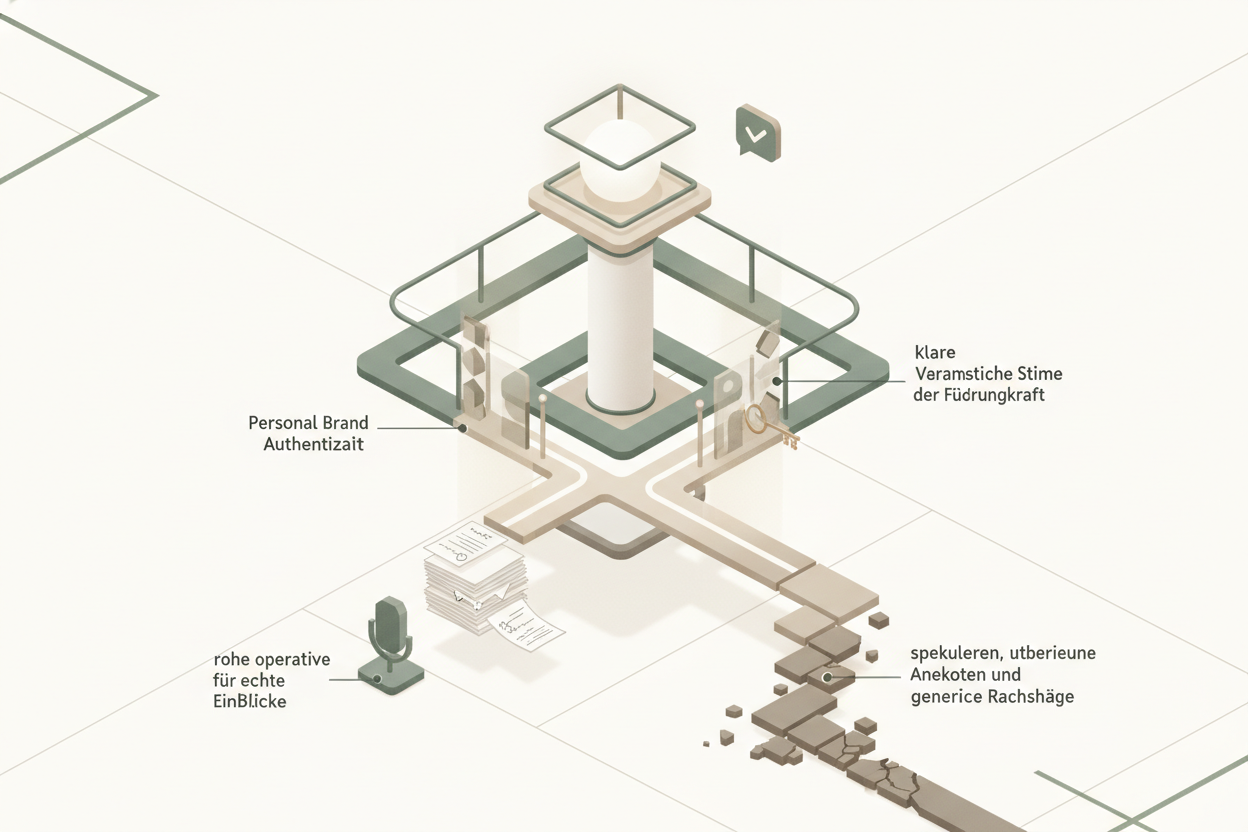
Outsourcing executive content on professional networks often feels like a dangerous balancing act between saving valuable leadership time and diluting personal credibility. Executive LinkedIn ghostwriting works effectively only when rigorous guardrails prevent artificial messaging, fabricated personal victories, and shallow engagement tactics. By establishing clear ownership boundaries where executives provide real operational stories while writers handle structure, leaders can scale their industry influence safely. In this guide, we break down how to establish robust governance rules for ghostwritten executive branding on LinkedIn without losing your voice.
Many managing directors and founders hesitate to partner with external writers because they fear sounding like a generic corporate press release or, worse, an overly dramatic influencer. The core issue is rarely the skill of the writer; it is the absence of clear operational guardrails. When guardrails are absent, ghostwriters are forced to guess, leading to exaggerated anecdotes and generic advice. By establishing clear guidelines on what can be drafted, what requires direct approval, and what is strictly forbidden, executive branding becomes a sustainable strategic asset.
Guardrails are essential for protecting genuine executive voice
Guardrails provide explicit boundaries that prevent ghostwritten executive posts from sounding artificial, hyperbolic, or disconnected from actual operational decisions. Instead of giving a writer free rein, guardrails define approved content pillars, prohibited formatting tropes, and mandatory review steps. This structure ensures that every published thought reflects your genuine business philosophy while saving hours of drafting time.
When busy leaders delegate content creation, the goal is never to outsource their thinking, but to outsource the transcription and polish of their daily observations. Executive branding on LinkedIn demands absolute alignment with real-world corporate strategy. Without operational rules, writers default to public templates that harm credibility across the DACH market, where professional audiences prize quiet competence over self-aggrandizing commentary. Establishing strict boundaries keeps the output grounded, accurate, and aligned with your real commercial voice.
Effective governance begins by categorizing executive content into three distinct zones: fully approved core themes, conditional topics requiring pre-interviewing, and off-limit topics. Core themes typically include industry observations, commentary on public regulations, and general management frameworks. Conditional topics include specific client outcomes, internal restructuring, or personal anecdotes, which always demand direct input from the executive during brief recurring voice notes or quick catch-up calls.
What are the non-negotiable rules for ethical ghostwriting?
The first non-negotiable rule is a total ban on fabricated wins, exaggerated emotional stories, and artificial engagement bait. Every anecdote must stem from an actual business event, client conversation, or internal operational lesson. Furthermore, the final approval of any strategic commentary must always remain strictly with the executive, ensuring total accountability for published viewpoints.
To maintain professional standards, organizations should establish a formal charter for executive LinkedIn activities. This document outlines the explicit boundaries for ghostwriting, detailing tone, approved subjects, and prohibited narrative devices. Below are the key pillars every leadership ghostwriting agreement must enforce:
- Zero tolerance for fictional narratives: Writers must never invent personal challenges, airport reflections, or fake client dialogues to generate sympathy or reach.
- Mandatory source verification: Any statistic, case reference, or market benchmark used in a post must be verified by the leadership team before publication.
- Nuanced platform tone: Content must respect regional professional norms, particularly on LinkedIn, where subtle observations carry far more weight than sensationalized promises.
- Prohibition of forced viral engagement: Ghostwriters are strictly forbidden from ending posts with desperate comment-baiting questions or manipulative calls to action.
Maintaining a clear tone of voice also extends into how teams evaluate performance. Rather than chasing vanity metrics or artificial comments, executive content should be evaluated against meaningful commercial interactions. When evaluating how social media performance supports broader business goals, leaders should focus on high-intent conversations rather than raw engagement numbers. Discover the three essential social media numbers that B2B leadership actually cares about to keep executive positioning aligned with genuine business impact.
Collaborative voice notes capture authentic leadership insights efficiently
Capturing an executive genuine tone requires short, highly focused voice note interviews rather than asking leaders to review blank pages or complete tedious questionnaires. A twenty-minute weekly voice recording allows executives to speak naturally about recent operational decisions, industry developments, or strategic challenges. The ghostwriter then transcribes, organizes, and refines these spontaneous thoughts into clear, engaging LinkedIn posts.
This interview-led process solves the primary complaint executives have about ghostwriting: that written drafts sound nothing like them. When a writer works directly from recorded speech, they capture the leader specific phrasing, preferred vocabulary, and exact technical terminology. The writer simply removes grammatical stumbles, organizes the narrative flow, and formats the text for optimal screen reading.
To make this workflow effortless, schedule a recurring weekly fifteen-minute touchpoint. The writer comes prepared with two timely industry questions and one prompt about internal company milestones. The executive answers naturally, sharing unscripted perspectives. This raw material provides enough material for two to three high-quality LinkedIn posts that carry the leader undeniable personal signature.
How do you navigate regional tone differences on professional networks?
Navigating regional tone differences requires tailoring content to local business cultures, particularly when contrasting North American hyperbole with the structured pragmatic expectations of DACH decision-makers. Executives speaking to German-speaking markets must emphasize precise operational facts, practical problem-solving, and professional restraint rather than emotional self-congratulation.
A common mistake in outsourced ghostwriting is adopting aggressive, sales-heavy phrasing or overly emotional storytelling templates imported from international marketing playbooks. In the DACH region, B2B decision-makers quickly dismiss content that feels sensationalized or manipulative. Authentic authority is established through calm analysis, demonstrated subject matter expertise, and respect for the reader time.
Striking the right tone often involves balancing professional rigor with approachable messaging. For instance, using subtle, self-aware commentary regarding common industry challenges can humanize a executive without undermining their technical authority. Learn how to master B2B humor on German social media to ensure your brand tone remains engaging, highly credible, and culturally resonant across LinkedIn.
Direct messaging guardrails preserve genuine relationship building
Automated direct messaging, auto-responders, and outsourced chat management under an executive personal profile must be strictly prohibited. While ghostwriters can assist in drafting top-of-funnel public posts, personal messages, connection requests, and direct responses to comments must remain under the executive personal control to protect professional trust.
When a prospect or industry peer reaches out via direct message, they expect to converse directly with the leader whose profile they visited. Outsourcing private conversations to junior staff or automated bots creates severe risk. If a contact discovers they are chatting with a agency employee using an executive persona, professional trust is broken immediately.
A practical middle ground is establishing a strict boundary between public posts and private dialogue. Ghostwriters manage the public queue and monitor comment threads, notifying the executive when a high-value contact leaves a detailed note. The executive then logs into LinkedIn to respond personally or dictates a quick audio response for the writer to post. This hybrid model keeps public visibility high while preserving total authenticity in private relationships.
Can executive content support accessible and inclusive corporate standards?
Executive content can and should lead by example by enforcing universal design, digital accessibility, and clear formatting across all published posts and media. Ensuring that executive posts include high-contrast visuals, plain text structures, descriptive alt text, and closed captions demonstrates operational maturity and modern leadership standards.
Accessibility is not an administrative afterthought; it is a visible signal of standard executive governance. When a founder or director posts accessible media, it signals to clients, candidates, and partners that the enterprise prioritizes inclusive communication across every channel. Ghostwriters must be trained to format content so that screen readers can process it smoothly, avoiding excessive emoji usage, unusual line breaks, or unreadable special fonts.
Furthermore, inclusive digital formatting improves overall content clarity for busy professionals scanning feeds on mobile devices during travel. Incorporating structured headings, short paragraphs, and clear image descriptions makes your leadership insights easier to consume for everyone. Implementing accurate accessibility standards is essential for B2B compliance and audience engagement. Discover why captions, alt text, and inclusive marketing are essential for building long-term professional trust.
Structured approval workflows guarantee strategic safety without bottlenecks
A structured approval workflow uses a shared content calendar with clear deadlines, enabling executives to review, edit, and authorize ghostwritten posts in under ten minutes per week. By establishing predictable approval cycles, content remains timely and accurate without creating administrative delays for leadership.
The standard workflow should follow a simple three-step progression: Voice Capture, Draft Staging, and Executive Authorization. During Staging, the ghostwriter uploads completed drafts, visual assets, and alt text to a centralized review tool. The executive receives a automated notification and can approve, request edits, or reject drafts with a single click from their smartphone.
To prevent delays, set clear timing expectations. If a post addressing breaking industry news requires immediate publishing, it must be routed through a rapid-response channel. For routine thought leadership, staging drafts five to seven days in advance gives executives ample time to review posts between meetings. If a draft feels slightly off-key, the executive simply records a quick voice edit, allowing the writer to refine the text immediately.
Delegating executive LinkedIn content does not mean sacrificing your personal identity or corporate integrity. With defined guardrails, structured voice-note interviews, and precise regional messaging, ghostwriting becomes a transparent engine for industry thought leadership. By enforcing honest boundaries and banning artificial engagement tactics, leaders build authentic visibility that strengthens business relationships across the DACH region. If you are exploring how to structure authentic executive branding for your leadership team, we welcome a friendly conversation to share insights and explore practical governance frameworks.